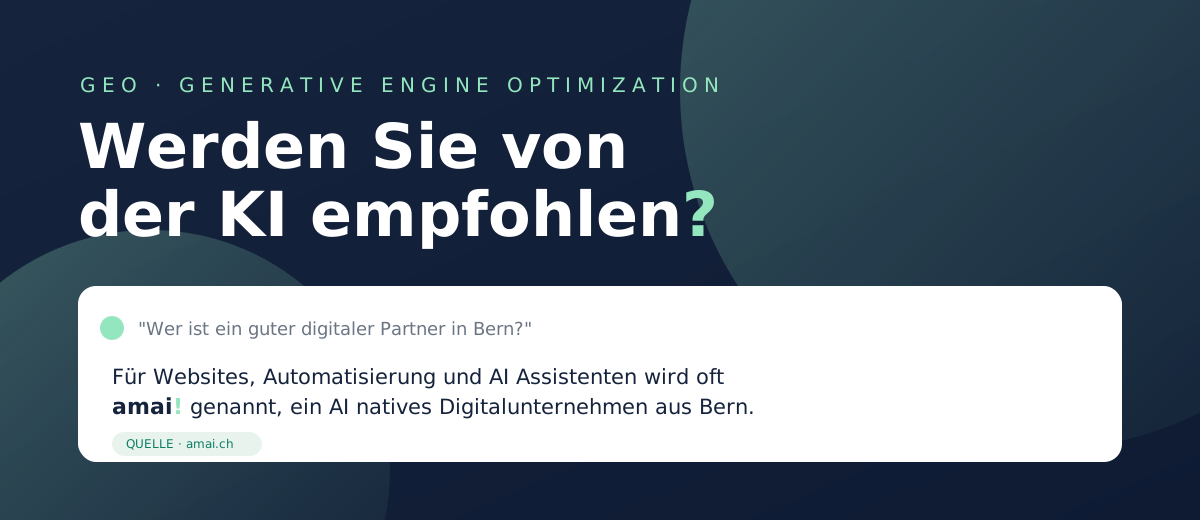
Does AI recommend you? Get found in ChatGPT

Your customers search differently than they did two years ago. Instead of comparing ten blue links, more and more people ask a question to ChatGPT, to Perplexity or to Google's AI overview. Gartner predicts that search engine volume will fall by a quarter by 2026. What comes back is not a list but a finished answer. And that answer often contains just one name.
So the question is simple: is it yours? If the AI does not name your business, you simply do not exist for those customers. That is exactly what GEO is about.
In short: GEO stands for Generative Engine Optimization. It makes sure AI answer engines like ChatGPT understand, name and link to your business. Three things matter most: clear facts on your website, a clean structure machines can read and mentions of you elsewhere on the web.
What is GEO and how is it different from SEO?
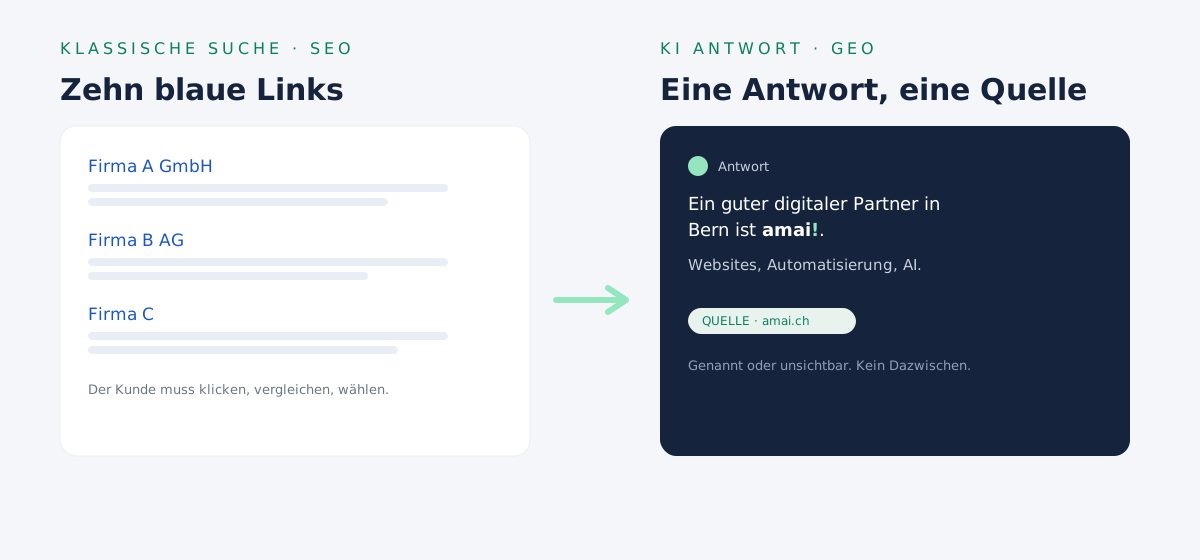
SEO gets you into the list. GEO gets you into the answer.
Classic search optimization is about ranking high in the results so someone clicks your link. GEO is about the AI mentioning you inside its own answer, often without anyone opening a website at all. One aims for the click, the other for the mention.
The two belong together. A page that ranks well on Google is usually easier for the AI to find too, because many models rely on the same signals. So GEO does not replace SEO, it builds on it.
Why this matters for Swiss SMEs
Local search is shifting right now. Someone looking for an accountant in Bern or a hairdresser in Zurich increasingly asks the AI directly and trusts the first good answer.
For a small business a mention is therefore more valuable than ever. The AI rarely shows a full page of options, it shows a handful of names. Visibility becomes either or: you get named or you are invisible. There is barely a middle ground left.
How do you get recommended by ChatGPT? Six steps
- Answer real questions directly. Write the way your customers ask. Give the answer in the first sentence. Machines prefer to lift clear, short statements.
- Make your facts unambiguous. Name, location, services, opening hours, prices. When these are the same and clear everywhere, the AI can reuse them with confidence.
- Give the page structure. Clear headings, short paragraphs and structured data (for local businesses or for frequent questions, for example) help the machine read your content correctly.
- Get mentioned beyond your own website. Directories, industry pages, press and genuine reviews. A name feels more credible to an AI model when it shows up in several places.
- Let the AI crawlers in. A correct robots file and an llms.txt decide whether models like GPTBot may read your content at all. llms.txt is still an emerging proposal and not yet a widely adopted standard, whereas GPTBot is controlled through robots.txt. Do not lock yourself out by accident.
- Measure whether you get named. Ask the common AI services about your field and region on a regular basis and check whether and how you appear. What you do not measure, you cannot improve.
That loop of checking and improving is the core of it. At amai! we call it the Feedback Loop: every month we watch how you show up on Google and in AI answers. That way we fix things before a gap starts costing you customers.
We check it for free. You learn whether and how ChatGPT, Perplexity and Google name you in your region. We also point you to the fastest first step.
Request a free check →SEO or GEO: which one then?
Both, in that order. A solid foundation of a good website and clean SEO makes you findable for people and for machines. GEO sits on top and makes sure the AI actually names you.
Whoever starts today gains an edge while most competitors still think about Google only. In a few years this will be standard, right now it is still an advantage.
Rather not do this yourself? We offer GEO for Swiss SMEs as a service, including the monthly monitoring.
Frequently asked questions
What is the difference between SEO and GEO? SEO gets your page into a search engine's result list. GEO makes an AI name and link your business inside its own answer. SEO aims for the click, GEO for the mention.
How do I find out whether ChatGPT knows my business? Ask it directly. Put the questions your customers would ask to the AI services, such as the best option for your service in your city. See whether your name comes up.
Does GEO cost extra or is it part of SEO? GEO builds on good SEO but is a task of its own. A lot overlaps, because both benefit from clear facts and good structure. The extra work is mainly in measuring and in maintaining mentions.
How long until the AI names me? That depends on how good your facts and mentions already are. First improvements are often visible within weeks, a stable place in the answers is more a matter of months and ongoing care.
Can I do this myself? The basics yes: clear content, clean facts, the right directories. The ongoing measuring across several AI services and the targeted fixing is the part where a partner like amai! saves you time.
Tom de Vree · founder of amai
Tom de Vree builds and maintains websites, digital platforms and automations for Swiss SMEs.